Context
上下文 context.Context Go 语言中用来设置截止日期、同步信号,传递请求相关值的结构体。
可能会创建多个 Goroutine 来处理一次请求,而 context.Context 的作用是在不同 Goroutine 之间同步请求特定数据、取消信号以及处理请求的截止日期。
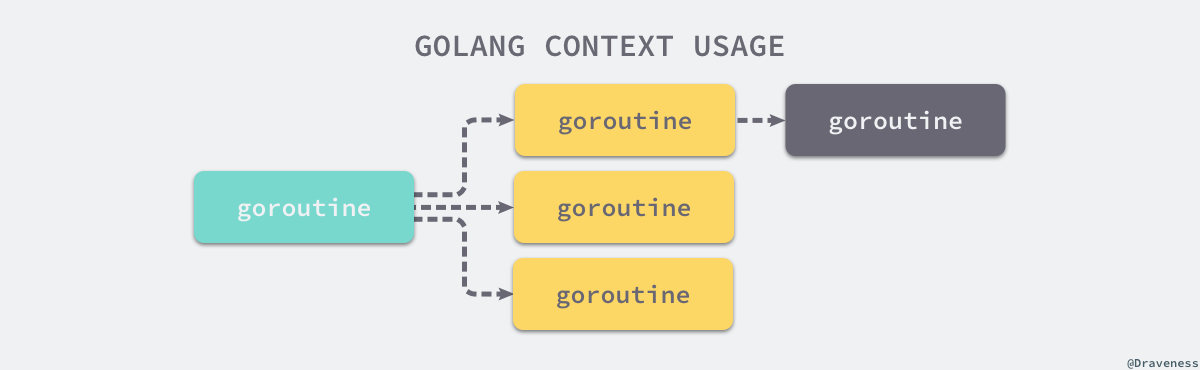
每一个 context.Context 都会从最顶层的 Goroutine 一层一层传递到最下层。context.Context 可以在上层 Goroutine 执行出现错误时,将信号及时同步给下层。
构造
不可变性
context.BackGround
- returns a non-nil, empty Context
- never canceled, has no values, and has no deadline
- as the top-level Context for incoming requests
context.TODO
- returns a non-nil, empty Context
- never canceled, has no values, and has no deadline
- use context.TODO when it's unclear
context.WithValue
a copy of parent in which the value associated with key is val.
- Users of WithValue should define their own types for keys, not use built-in type or string ;
实际获取的时候,是从当前层开始逐层的进行向上递归,直至找到某个匹配的key 或者返回 nil。
context.WithCancel
a copy of parent with a new Done channel.
The returned context's Done channel is closed when the returned cancel function is called or when the parent context's Done channel is closed, whichever happens first.
取消某个parent的goroutine, 实际上会递归层层cancel掉自己的child context的done chan从而让整个调用链中所有监听cancel的goroutine退出
- 当代码执行完成后,应当立即执行
cancel函数(这里的cancel 有 complete的含义);
type cancelCtx struct {
    Context

    mu       sync.Mutex            // protects following fields 保护属性
    done     chan struct{}         // created lazily, closed by first cancel call
    // 记录子 context 的cancel
    children map[canceler]struct{} // set to nil by the first cancel call
    err      error                 // set to non-nil by the first cancel call
}
context.WithTimeout
实现原理:启动一个定时器,然后在超时的时候,直接将当前的context给cancel掉,就可以实现监听在当前和下层的context.Done()的goroutine的退出
示例:
- 即时超时返回了,但是子协程仍在继续运行,直到自己退出
func main() {
    ctx, cancel := context.WithTimeout(context.Background(), 1*time.Second)
    // cancel 一定要执行
    defer cancel()

    go handle(ctx, 500*time.Millisecond)
    select {
    case <-ctx.Done():
        fmt.Println("main", ctx.Err())
    }
}

func handle(ctx context.Context, duration time.Duration) {
    select {
    case <-ctx.Done():
        fmt.Println("handle", ctx.Err())
    case <-time.After(duration):
        // 500ms < 1s, run here
        fmt.Println("process request with", duration)
    }
}